|
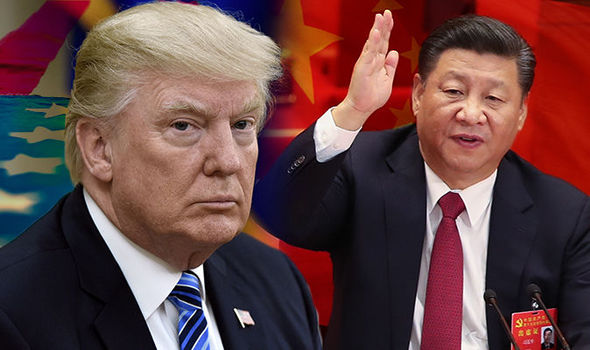
Donald Trump appears to have made a substantial policy change on Taiwan during last week’s visit to Beijing, characterising US arms sales to Taipei as “a very good negotiating chip for us”.
Xi Jinping, the Chinese leader, began the meetings by saying Taiwan was “the most critical issue” between them, potentially leading to conflict if not handled correctly. With this threat looming, initial readouts of the meetings revealed no specifics of their Taiwan-related discussions. On Air Force One’s return flight to Washington, however, Trump confessed that Taiwan had been discussed “in great detail”. Of course, in typical Trump fashion, he had first said, “No. I didn’t say anything about it.”
The first answer was better, had it been true. US arms sales to Taiwan have irritated Beijing ever since Jimmy Carter’s 1978 recognition of the Communist-controlled People’s Republic as China’s de jure government, derecognising Chiang Kai-shek’s government-in-exile on Taiwan.
Congress, appalled at Carter’s abandoning a trusted ally, responded by passing the Taiwan Relations Act (TRA) to protect against further concessions being made to Beijing.
One essential requirement of the act is that America “will make available to Taiwan such defence articles and defence services in such quantity as may be necessary to enable Taiwan to maintain a sufficient self-defence capability”.
Trump apparently believes he is no longer bound by this mandatory language.
Early US arms sales to Taiwan so agitated China that Ronald Reagan’s administration agreed in 1982 to a joint communiqué with Beijing to clarify the issue. To reassure Taiwan, Reagan simultaneously conveyed a message that became known as the “Six Assurances”.
Three assurances are critical. Washington had not agreed to make any modifications to the Taiwan Relations Act (TRA); it had not agreed to set a date for ending arms sales to Taiwan; and it had not agreed to discuss arms sales with Beijing.
On Air Force One, Trump treated these Reagan assurances dismissively: “Well, I think the 1980s is a long way. That’s a big, far distance.” But not for Taipei, nor for Americans who still see Taiwan as a trusted, democratic ally, and a critical link in “the first island chain” standing between China and the open Pacific.
Trump added: “I think the last thing we need right now is a war that’s 9,500 miles away.”
No one wants a China-Taiwan war, but it is hardly Taiwan that is pursuing aggressive tactics like practising invasions of the Chinese mainland or blockades of its coastline. That is what China is doing to Taiwan, which is justifiably concerned.
The real question is not whether Taipei and Washington want a war, but how best to avoid it.
Does Trump think he reduces the chances of Beijing taking belligerent action by militarily undercutting Taiwan, and, implicitly, other Pacific allies, and by his generally Uriah Heep-like behaviour toward Xi?
By using a pending $14bn arms package to Taiwan as a bargaining chip with China? By consulting with Xi on that package, and perhaps future sales? Chinese foreign minister Wang Yi jumped immediately on what he saw as a Trump concession, saying that Beijing wanted to see “concrete actions” from Washington, almost certainly meaning cutting off or significantly reducing arms transfers.
Trump’s approach is the opposite of what Reagan meant by “peace through strength”. Potential aggression is deterred by firmness not weakness. If Trump is willing to bargain on arms sales, Xi could well conclude, dangerously if accurate, that there would be no meaningful US response if China subsequently blockaded Taiwan on some pretext. Would Trump act to break the blockade, or permit Taiwan to fall under Chinese hegemony?
Trump also addressed that issue on Air Force One: “There’s only one person that knows that. You know who it is? Me. I’m the only person.” In the Taiwan context, Trump’s comment seemingly reflects, for now, the long-standing American policy of strategic ambiguity.
Whether such ambiguity any longer really deters China is an open question. Many, myself included, believe Washington should replace the ambiguity with a clear politico-military commitment, thereby strengthening deterrence against Chinese aggression.
Taiwan’s worry is precisely the concern European allies have over what Trump would do if a Nato member country, attacked by Russia, asked for US assistance under Article Five of the North Atlantic Treaty. Ambiguity in the Nato context could be catastrophic. No wonder US allies in both the Atlantic and the Indo-Pacific are nervous. Are they all just “bargaining chips”?
Trump acknowledged that he had made no final decision on the pending arms sale. He committed to talk to Taiwanese president Lai Ching-te, who will assuredly urge moving the $14bn package forward, as his foreign ministry has already foreshadowed. Trump also said he made no comment on the prospect of Taiwan’s independence, which Xi raised, thus avoiding at least one pitfall some Taiwanese supporters had worried about before the summit.
Nonetheless, Trump’s “bargaining chip” approach easily implies US concessions on what is, for Taiwan, an existential question, undermining the island’s always-difficult international diplomatic status.
The coming days may tell us more about the Xi-Trump discussions on Taiwan and other issues. If Trump indeed lapses into appeasing Beijing, trouble of unknowable but deeply worrying dimensions lies ahead, and not just on Taiwan.
|