|
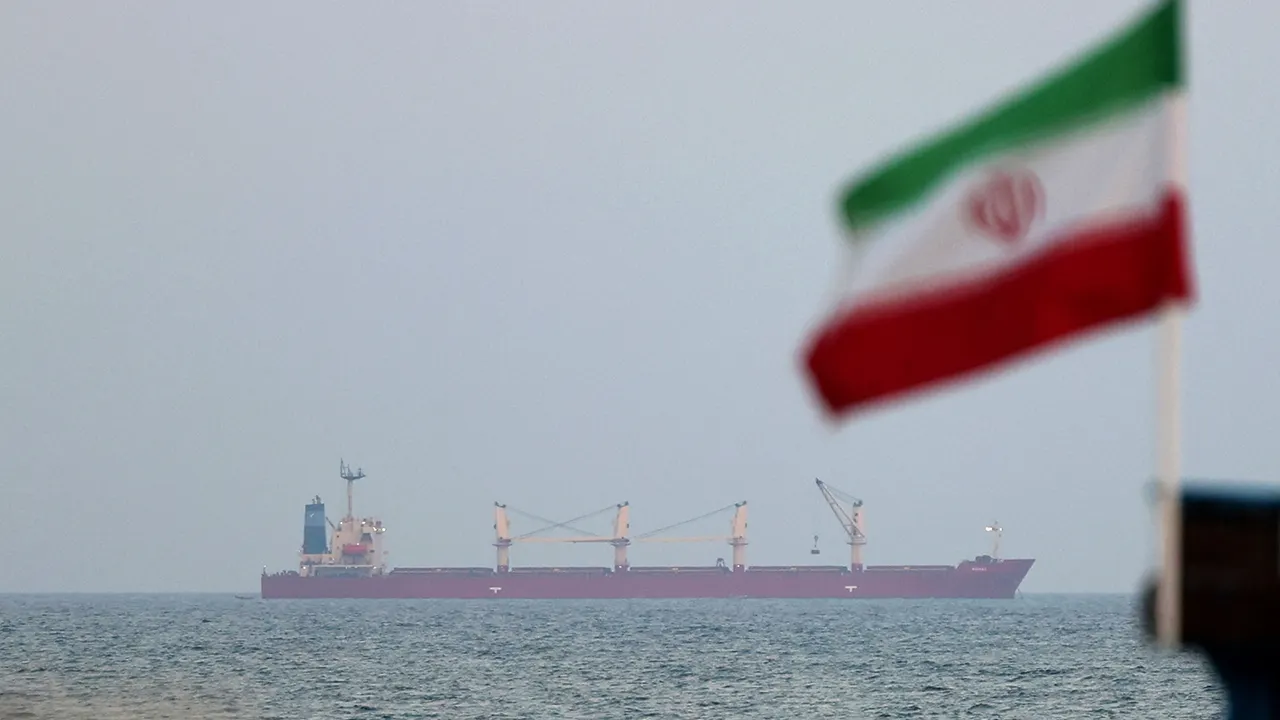
Every day that the showdown continues in the Gulf, the world is deprived of an eighth of its oil supply and must draw deeper into its vanishing inventories.
“The scale of the challenge has not been well understood: as of today, we are losing 13 million barrels per day and tomorrow it may be bigger,” said Fatih Birol, the head of the International Energy Agency.
The shortfall is likely to rise to 15 million if the US navy carries out its plan to blockade Iranian oil moving through the Strait of Hormuz, which it has so far failed to do. That’s not surprising, given that Donald Trump launched this war with inadequate forces based on Israeli assurances – deemed “farcical” by his own CIA chief – that Iran would crumble at the first shock.
Tehran warns it will expand the war to the Red Sea route if its ships are attacked or sunk, endangering another six million barrels a day at the Saudi terminal of Yanbu and causing wider havoc to global container shipping.
“The ports of the Gulf are either for everyone or for no one,” it said.
US Central Command says shipping from non-Iranian ports in the Gulf can move freely, but it has no credible way to restore normal traffic. It would take at least 200,000 US ground troops and months of fighting to secure the long Iranian coastline and knock out the remaining missile launchers and drone units hidden in the mountains.
“The US and Iran are drifting into a familiar and dangerous pattern: a war of attrition where each side believes it can impose more pain than it can absorb,” said Danny Citrinowicz, a former head of the Iran desk of Israel Defense Intelligence.
The second dangerous twist to this blockade is that the US navy is now expected to board and seize Chinese-flagged ships, constituting a direct attack on China’s energy supply chain. This is arguably an act of war – “the law of the jungle”, as Xi Jinping put it on Tuesday morning.
“We will never allow any foreign force to bully, oppress or subjugate us. Anyone who would attempt to do so will find themselves on collision force with a great wall of steel forged by over 1.4 billion Chinese people,” he said.
The world market for physical oil is already under extreme stress. The actual price for delivery in Europe today – “dated Brent FOB Northern Europe” – is trading at $145 to $150, a record premium over paper futures.
The last pre-war shipments are arriving in Europe, if they have not already been sucked away by desperate Asian buyers willing to pay higher prices.
“The physical-market warning signs continue to flash red,” said Helima Croft, a former CIA analyst now at RBC Capital. “If President Trump backs his blockade threat with actual boats, a convergence between the paper and physical markets may soon come.”
She said the financial markets were reacting to noise and tweets rather than counting molecules and examining the deeper character of the Iranian regime.
Wall Street is overly confident that mutual threats by the White House and the Iranian Revolutionary Guard Corps (IRGC) are a charade of bluffs and counter-bluffs as both sides seek the off-ramp. Brent crude has settled back below $100 a barrel. The S&P 500 index is higher today than it was before the war began.
Brent futures are entirely discounting the risk that the conflict could spiral further out of control, which is brave optimism given that Trump lives in an information bubble of fabricated facts and has a pathological need for escalation dominance.
Citrinowicz said Trump had yet to grasp the critical fact that the IRGC thinks it has the upper hand in its asymmetric war of guerrilla resistance. That failure of emotional intelligence is a recipe for negotiating trouble.
“What is striking is that even after five weeks of intense fighting, the administration still seems to misunderstand a fundamental point: Iran is not Venezuela. Closing the Strait of Hormuz will not force Iran into submission,” he said.
There is a deal to be done. Iran offered to suspend enrichment of uranium for five years in the failed talks over the weekend. Trump wanted 20 years. The original deal in 2015 under Barack Obama was for 10 years. If Trump is willing to accept worse terms than he was offered before the war, and worse terms than Obama secured, he can clinch a quick “win”.
But Citrinowicz said it would have to be on terms closer to Iran’s demands than to Trump’s surrender ultimatum. We are a long way from that awful moment of realism in the Oval Office.
As for the new and breathtakingly insouciant threat against China, if the White House thinks that the country is so short for oil that it will snap to attention and pressure Iran into reopening the Strait of Hormuz, it risks yet another trap of self-deception.
Otherwise, all that the IRGC has to do is to survive for another two or three months and wait for the deficit in global oil supply to collide with the US summer driving season.
Iran is in grave economic trouble but that is academic at this point. The regime has just earned windfall export revenues from the oil price spike and from Trump’s earlier and opposite policy of waiving sanctions. The country is not starving. It has land access to relatively friendly countries: Turkey, Pakistan and, indirectly, Russia and Kazakhstan.
The quick fixes to this global energy crunch have largely been exhausted. Saudi Arabia’s East-West pipeline to the Red Sea is running at full capacity. The market has soaked up floating storage of unsanctioned Russian and Iranian barrels.
The emergency release of stocks by the IEA is running thin. The US strategic petroleum reserve is nearing levels of depletion that risk damaging the salt caverns.
“Enjoy the current pump figures, soon you’ll be nostalgic for $4-$5 gas,” taunted Mohammad Ghalibaf, Iran’s chief negotiator and president of the country’s parliament.
The rule of thumb is that every $10 rise in oil pushes up US petrol prices by 30 cents a gallon. The average retail price is currently $4.12. The current physical price of oil in Europe already implies almost $6 petrol in the US once the global market adjusts in the coming weeks.
It is not hard to imagine $8 and 1970s petrol rationing in time for the mid-term elections if the Iranians prove intractable.
The Chinese filled their strategic petroleum reserve at a breakneck pace last year. In extremis, they can cover 300 days of lost imports from the Gulf.
China still obtains half its oil from Malaysia, Russia, Brazil and Africa. It has the world’s largest foreign exchange reserves by far and can buy whatever it needs on the open market. It controls the internal prices of diesel and jet fuel, and has suspended exports of refined products to trap them inside its fortress economy.
Beijing has deep structural economic problems of its own but it has a greater tactical interest in waiting a little longer as the US burns through its munitions, destroys its credibility in the Middle East, further antagonises Europe and squanders its moral authority on an adventurist debacle.
The US blockade subverts the longstanding US doctrine of free navigation. It is a pure gift to Chinese propaganda as Xi extends his shadow over the Strait of Taiwan and the South China Sea.
What would happen if China retaliated by intercepting shipping and freight flights from Taiwan while much of the US navy is deployed in the Middle East, and after having stripped US forces in South Korea and Japan of critical defensive systems?
If the US wants to squeeze China’s oil, it must surely be prepared for China to squeeze America’s supply of advanced semiconductors in response. Every cutting-edge AI chip from Nvidia is either made or finished in Taiwan.
I strongly doubt that China will take that drastic step. It has too much to gain by basking in its perceived new role as the only responsible superpower. But it could do so if it chose. Two can play Trump’s game of blockades.
|