|
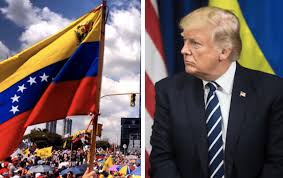
In dramatic fashion, the United States has successfully captured Venezuela’s dictator Nicolas Maduro and his wife, removing them from the country for arrest in New York. Although information remains incomplete, key regime figures like Vice President Delcy Rodriguez, Defense Minister Vladimir Padrino, and National Assembly President Jorge Rodriguez remain in Caracas. That means, as of now, the regime itself is still in place, lacking only Maduro. Trump’s remarks from Florida gave no indication he understands this. Someone should tell him quickly.
US action was entirely justified by critical national-security interests, including the threat posed by rising Russian and Cuban power in Venezuela, ostensibly supporting Maduro’s regime; the increasing interest and influence of China over the country’s oil reserves; and Iran’s malign presence, using its Caracas embassy for money laundering, coordinating Hezbollah’s Western Hemisphere activities, and watching over Venezuela’s extensive uranium-ore reserves. Although Donald Trump has criticised Maduro’s government for illegal narcotics trafficking and terrorist activities, these are secondary, albeit further evidence of the regime’s total illegitimacy.
For Venezuela’s opposition, the highest priority is improving the welfare of its people, both restoring political freedom and improving the dire economic straits into which Maduro drove his countrymen.
Maduro’s departure is a significant first step, but far from the last. The “pinpoint” strike recalls the 1990 seizure of Panama’s dictator Manuel Noriega, also on drug charges. It is no coincidence the raid against Maduro came 35 years to the day after capturing Noriega. Panama’s civilian leaders took charge almost immediately. The similarities to Venezuela stop there.
Washington and Venezuela’s opposition should finish the job of removing the entire Maduro regime, but there is no evidence further military operations will happen, despite Trump’s threats about a “second wave.” Trump also announced that the United States “will run the country” until a safe transition can occur, but in no way indicated how that would happen or when. Remarkably, he implied US control could be lengthy, and he did not rule out “boots on the ground.” How this will unfold is simply up to your imagination. As it is to Trump’s.
Noriega was a home-grown authoritarian, with limited external support. The Venezuela situation is very different. It is precisely the influence foreign actors that has kept Maduro in power, and which threatens the Western Hemisphere’s stability. Indeed, Venezuelan opposition figures believe it was Russian and Cuban determination that steadied Maduro in 2019, helping to thwart the opposition’s attempted coup. To these foreign states, however, Maduro personally was far less consequential than the regime itself.
Moscow prizes Venezuela as a forward hemispheric base, safer than Cuba because further from US territory. Cuba has an extensive military and intelligence presence in Venezuela, and has relied heavily on petroleum shipments to sustain its faltering economy. Havana recognises that overthrowing the Chavez-Maduro dictatorship would directly imperil its own post-Castro regime. Cuba’s fears are correct, which is undoubtedly a key reason why Secretary of State Marco Rubio has so strongly advocated to Trump that Maduro had to go.
At this point, given the uncertainty about what further military steps Washington might take, it is but a hollow victory if Maduro is the only prize. It will be critical to ascertain whether and to what extent Venezuela’s opposition knew of or facilitated the raid that captured Maduro. Has the White House involved the opposition’s help in its contingency planning? For example, have opposition leaders been contacting important regime figures, attempting to split the Chavistas, pitting its key actors against each other, promising amnesty for those who would come over to support the opposition? What additional help can Washington provide?
In the best case, the opposition should prepare to assume the reins of government in the very near future. In 2018-19, we did considerable planning for “the day after” Maduro’s overthrow, but sadly those plans were never put to the test. Is the same true today? The regime is wounded, but if the opposition is not prepared to step up promptly, the chance to return government to Venezuela’s people may disappear quickly.
In the worst case, which is that the overnight raid in Caracas was all Trump is prepared to do, or ever does, is the opposition sufficiently capable of protecting its top leaders from the inevitable reprisals, including imprisonment and even execution? The very fact of cooperation with Washington will be sufficient justification for Maduro’s successors to do their worst.
Most important of all, will Moscow, Havana, Beijing and Tehran remain behind their allies in Caracas? Neither individually nor collectively can they tip the military balance against Washington and Venezuela’s opposition, but in lower-key ways, they can support the temporarily headless dictatorship in multiple ways. Russia recently reflagged an oil tanker pursued by the US Coast Guard, a small piece of evidence of what might lie ahead.
For me, the Trump administration’s 2019 failure to oust Maduro was one of its saddest points. Let’s hope for better days this time.
|